Invisible Architects: Why the People Who Actually Build the Sound Never Get the Glory
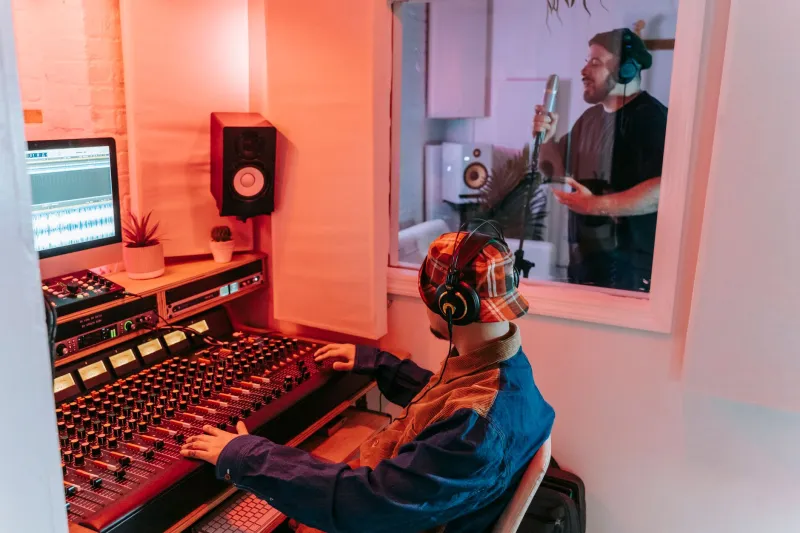
Let's set the scene. A record drops on a Friday. By Sunday it's trending on TikTok. By the following Thursday it's on three editorial playlists and the artist is doing press runs, talking about their "vision" and their "authentic voice." The interviewer nods. The fans agree. Somewhere across town, the mixing engineer who spent 60 hours on that record refreshes their Spotify royalty dashboard and watches the fractions of a cent roll in.
This is not a new story. But in 2025, with more producers building careers from home studios and more music being made collaboratively across time zones, the credit gap has gotten harder to ignore — and harder to close.
The Psychology of Who Gets the Flowers
There's a reason audiences default to crediting artists over producers. It's not malice — it's just how the human brain processes creative work. We attach music to faces. We attach faces to emotion. The person singing the hook, performing the breakdown, posting the BTS content — that's the figure we've been trained to associate with the art.
Producers and mixing engineers exist in the background by design. And for a long time, many were fine with that. The craft was the reward. The check cleared. Move on to the next session.
But the industry has changed. The rise of producer-as-brand — think Metro Boomin commanding his own headline moments, or the way Mike Dean's work gets dissected in production forums — has proven that behind-the-scenes contributors can build real cultural equity. The question is why so many still don't, and whether the system is actively working against them.
"You Made Me Sound Like That" — And Then They Forgot You Did
Talk to any working mixing engineer with more than a few years in the game and you'll hear some version of the same story. They took a rough, muddy session file and turned it into something radio-ready. The artist loved it. The label loved it. And then the press release went out and their name appeared nowhere — or at the very bottom, in the kind of font size that requires a zoom.
This isn't just about ego. It's about economics. Recognition in this industry has a direct line to future work. When a Grammy nomination credits a vocalist and their primary songwriter but the mixing engineer gets folded into a vague "additional production" line, that engineer loses leverage in their next rate negotiation. They lose discoverability. They lose the kind of organic word-of-mouth that builds a real career.
The Recording Academy has made strides in recent years to expand Grammy categories and recognize more contributors — but even that progress moves at the pace of an institution that took decades to acknowledge hip-hop as a legitimate genre. The culture moves faster than the awards do.
The "Just a Producer" Trap
There's a subtle but devastating phrase that shows up in how producers are discussed, even by people who respect them: just the producer. Just the guy on the boards. Just the one who did the beat.
That word — just — carries an enormous amount of dismissal inside three letters. It positions production as a service rather than an art. It implies that the real creativity lived somewhere else and the producer was there to execute it.
Any producer who's ever rebuilt a vocal performance through careful compression and harmonic saturation, who's sculpted low-end so it hits differently on a car speaker versus earbuds, who's made a chorus feel like it physically lifts — they know that what they do is not just anything. But the vocabulary the industry uses hasn't caught up to that reality.
What Producers Can Actually Do About It
Complaining about the system is valid. Changing your position within it is better. Here's where producers and mixing engineers are starting to take back narrative control.
Build in public. The producers gaining the most cultural traction right now are the ones showing their work. Breakdown videos, session clips, "how I made this" content — it's not selling out, it's storytelling. When fans understand that the sonic texture they love was engineered by a specific person, they start following that person. That's leverage.
Get your credits locked before the project drops. This one is foundational and still gets skipped constantly. If your name isn't on the metadata, it doesn't exist as far as streaming platforms, PROs, and most journalists are concerned. Use tools like Songfile or work directly with your PRO to register your contributions properly. A split sheet signed at the start of a session protects you later when memories get convenient.
Stop treating your social presence like an afterthought. Artists understand that their online presence is part of their career infrastructure. Producers need the same mindset. You don't have to be a content machine — but a consistent, focused presence that highlights your work, your process, and your taste builds the kind of recognition that eventually translates into better rates, better clients, and better opportunities.
Ask for the credit explicitly. This sounds obvious. It's not always done. When you deliver a mix or a finished production, make it a standard part of your communication to confirm how you'll be credited — on the release, in press materials, in social posts. Most artists aren't deliberately cutting you out. They just haven't been trained to think about it. Train them.
Align with other producers. The community aspect of production is one of the most underused tools in the space. When producers publicly support each other's work, amplify each other's credits, and build collective visibility, it shifts the cultural conversation. Streaming platforms, blogs, and journalists start to see producers as figures worth covering — not just functions worth hiring.
The Industry Owes Producers a Reckoning
At some point, the broader music business is going to have to reckon with the fact that the people engineering its most profitable moments are often its least recognized contributors. That's not just an equity issue — it's a sustainability issue. When producers can't build sustainable brands, can't translate their work into proportional recognition and revenue, the pipeline of talent starts to thin out or migrate toward other industries that treat skilled technical creatives better.
The good news is that the conversation is already shifting. Producer tags have become a cultural shorthand. Fans on Reddit and production forums dissect engineering choices the way they used to only dissect lyrics. The infrastructure for producer recognition exists — it just needs to be used more aggressively, more consistently, and more collectively.
You built the sound. Now build the brand that gets credit for it.