Strangers in the Studio: How Working With the 'Wrong' Artist Might Be Your Best Career Move
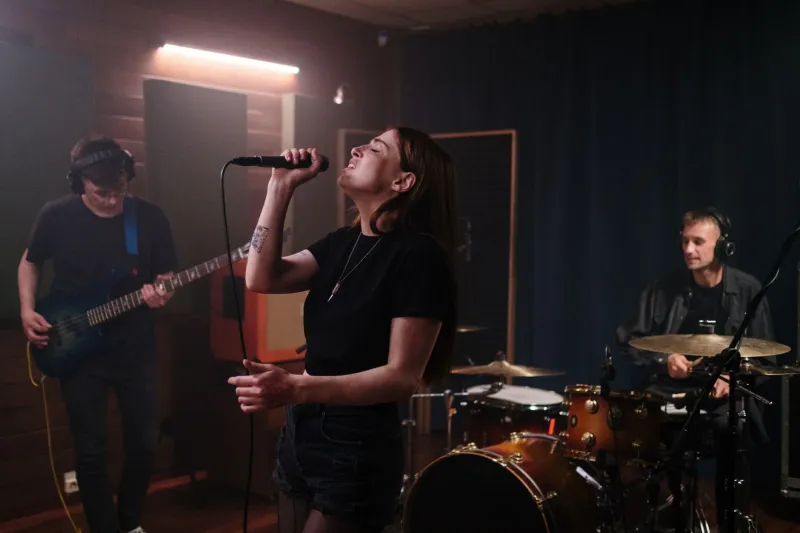
There's a moment every producer knows — you've been in the same creative circle for so long that every session starts sounding like the last one. The ideas are good. Technically, everything checks out. But something's missing. That spark. That thing that makes a listener stop mid-scroll and say what is that?
The answer might not be a new plugin or a better sample pack. It might be a collaborator who has absolutely no business being in the same room as you.
The Echo Chamber Problem Nobody Talks About
Creative communities are tight-knit by nature. Producers link up with artists in their genre, those artists bring in their people, and before you know it, you've got a whole network that all went to the same shows, sampled the same records, and grew up on the same playlists. That shared language is valuable — until it isn't.
Psychologists call this phenomenon cognitive entrenchment, and it hits creatives hard. When you've spent years developing instincts within a specific genre, those instincts start to function like guardrails. You know what works, so you stick to it. The problem is that "what works" in a familiar context rarely produces anything genuinely surprising.
The antidote? Friction. Specifically, the productive kind that comes from working with someone who doesn't share your assumptions.
Real Collabs, Real Results
The music industry has handed us some pretty compelling evidence that genre-crossing works. Consider the trajectory of projects like Lil Nas X's "Old Town Road" — a record that fused trap production with country aesthetics so completely that it broke chart systems that weren't built to categorize it. Or zoom out to the ongoing cross-pollination between Latin urbano and mainstream pop that's been reshaping what American radio sounds like. These weren't accidents. They were the result of artists and producers willing to sit with discomfort long enough to find common ground.
On a smaller, more instructive scale, look at what's been happening in the indie production space. Bedroom producers who cut their teeth on lo-fi hip-hop have been quietly sliding into sessions with jazz musicians and classical arrangers, pulling out chord structures and harmonic movements that straight-up don't exist in sample-based production. The results are landing on editorial playlists and getting sync placements because they sound different — not weird, just different in a way that feels intentional.
That distinction matters. Unexpected doesn't mean random. The best cross-genre collabs succeed because both parties bring genuine craft to the table and find a real point of connection, even if it takes a while to locate it.
The Psychology of Creative Chemistry
Here's what actually happens in the brain when you work with someone from a different musical world: novelty triggers dopamine. You're more alert, more curious, more willing to try things you'd normally dismiss. Your usual creative shortcuts get short-circuited because they don't apply anymore. That's uncomfortable, but it's also where originality lives.
There's also something to be said for the dynamic of mutual respect between collaborators who don't fully understand each other's world yet. When a hip-hop producer doesn't know the rules of bluegrass, they can't accidentally follow them. When a singer-songwriter doesn't know what's considered "done" in electronic music, she might suggest something that sounds absurd on paper and revelatory on playback.
The best cross-genre sessions tend to operate on a kind of creative trust fall — both people agreeing, implicitly or explicitly, that neither of them is the expert here, so they might as well experiment.
How to Find Collaborators Outside Your Network
This is the part where most advice gets vague, so let's get specific.
Start in adjacent spaces, not opposite ones. You don't have to go from hardcore rap production to bluegrass overnight. If you make R&B, look toward neo-soul vocalists who have jazz training. If you produce electronic music, find a composer who scores for film. Adjacent genres share some vocabulary, which makes the early sessions less chaotic and more generative.
Use platforms like SoundBetter, Vampr, and even Reddit's r/WeAreTheMusicMakers to find musicians outside your immediate circle. Search by instrument or genre rather than by vibe, and look for people whose work you don't immediately understand. That's a feature, not a bug.
Attend events outside your scene. If you're a hip-hop producer in Atlanta, go to a jazz showcase. If you make folk music in Nashville, sit in on an electronic music meetup. You're not looking for someone to copy — you're looking for someone who hears the world differently than you do.
Vet for openness, not just talent. When you're reaching out to a potential collaborator, pay attention to how they talk about music outside their genre. Do they dismiss it, or are they curious? You need someone who's willing to be a student for a session, not someone who's going to spend two hours explaining why their approach is the right one.
Setting the Session Up for Success
Once you've found your unlikely collaborator, the setup matters. Don't go in with a fully formed idea that you just need them to execute — that's not a collaboration, that's a service transaction. Come in with a direction, a mood, maybe a reference or two, and then genuinely leave room for the session to go somewhere unexpected.
Establish early that both of you have veto power, but neither of you has final say. The goal isn't to make your record with their flavor sprinkled on top. The goal is to make something neither of you could have made alone.
And document everything. When you're in uncharted territory, the throwaway ideas often turn out to be the most valuable ones in retrospect. Voice memos, screen recordings, rough exports — keep it all.
The Bigger Picture
The music industry rewards novelty, but it punishes chaos. The sweet spot — the place where careers are built and catalogs become iconic — is in controlled experimentation. Working with collaborators who don't share your background is one of the most reliable ways to find that sweet spot.
You're not abandoning your sound. You're expanding it. And in a landscape where listeners have access to literally everything ever recorded, expansion is the only strategy that still surprises people.
The stranger in the studio might just be the best creative decision you make this year.